真庭の家
July, 2015
―
所在地 : 岡山県真庭市
主要用途 : 専用住宅
家族構成 : 夫婦+子ども2人
設計監理 : 塚田保成デザイン事務所 / 塚田保成
構造設計 : SEI建築工房 / 小西清繁
施工 : 酒井工務店 / 瀧本晃
階数 : 平屋
敷地面積 : 298.00㎡
建物面積 : 134.35㎡(建蔽率45.09% 許容60%)
延床面積 : 134.35㎡(容積率45.09% 許容200%)
構造 : 木造
竣工 : 07/2015
写真 : 太田拓実
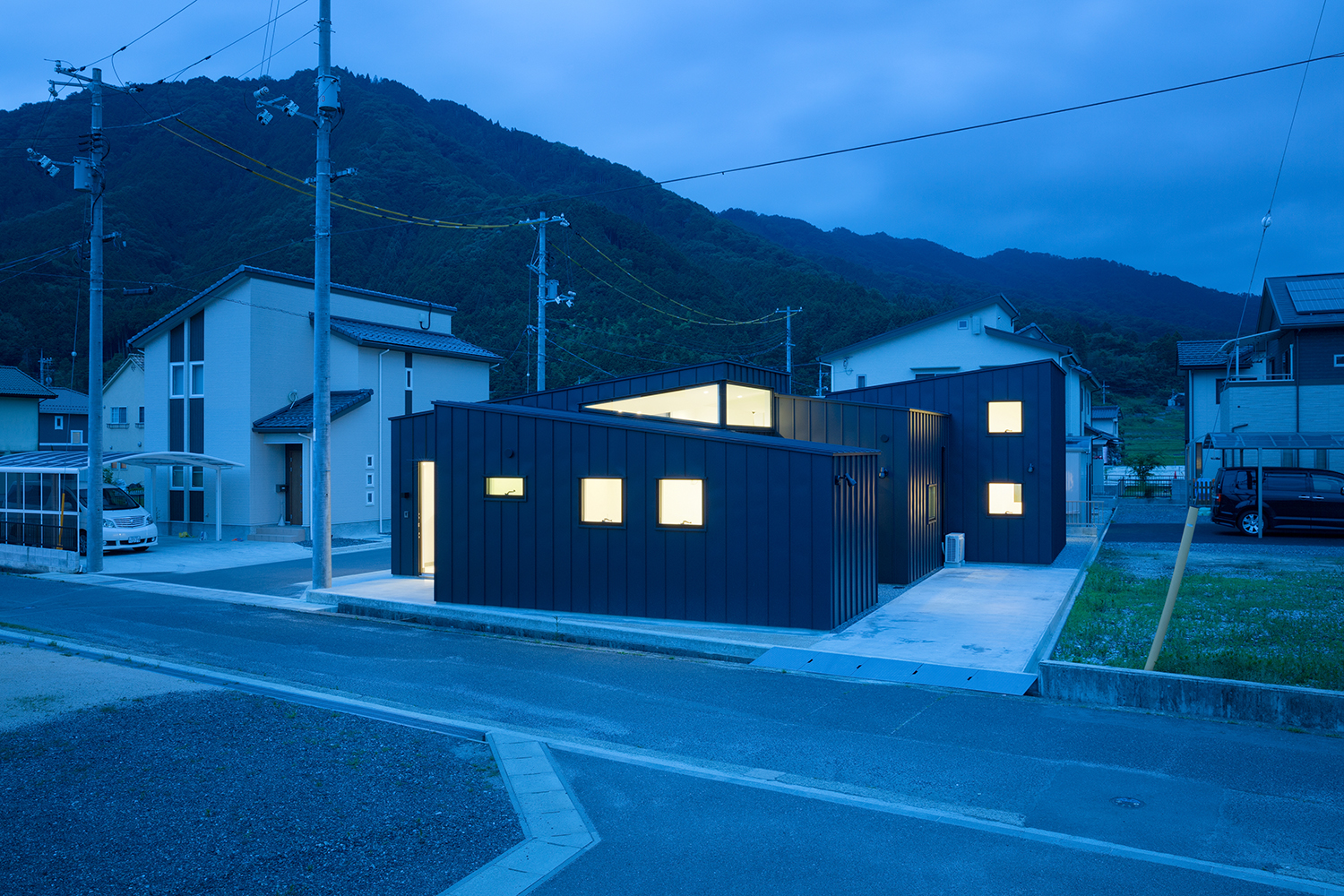
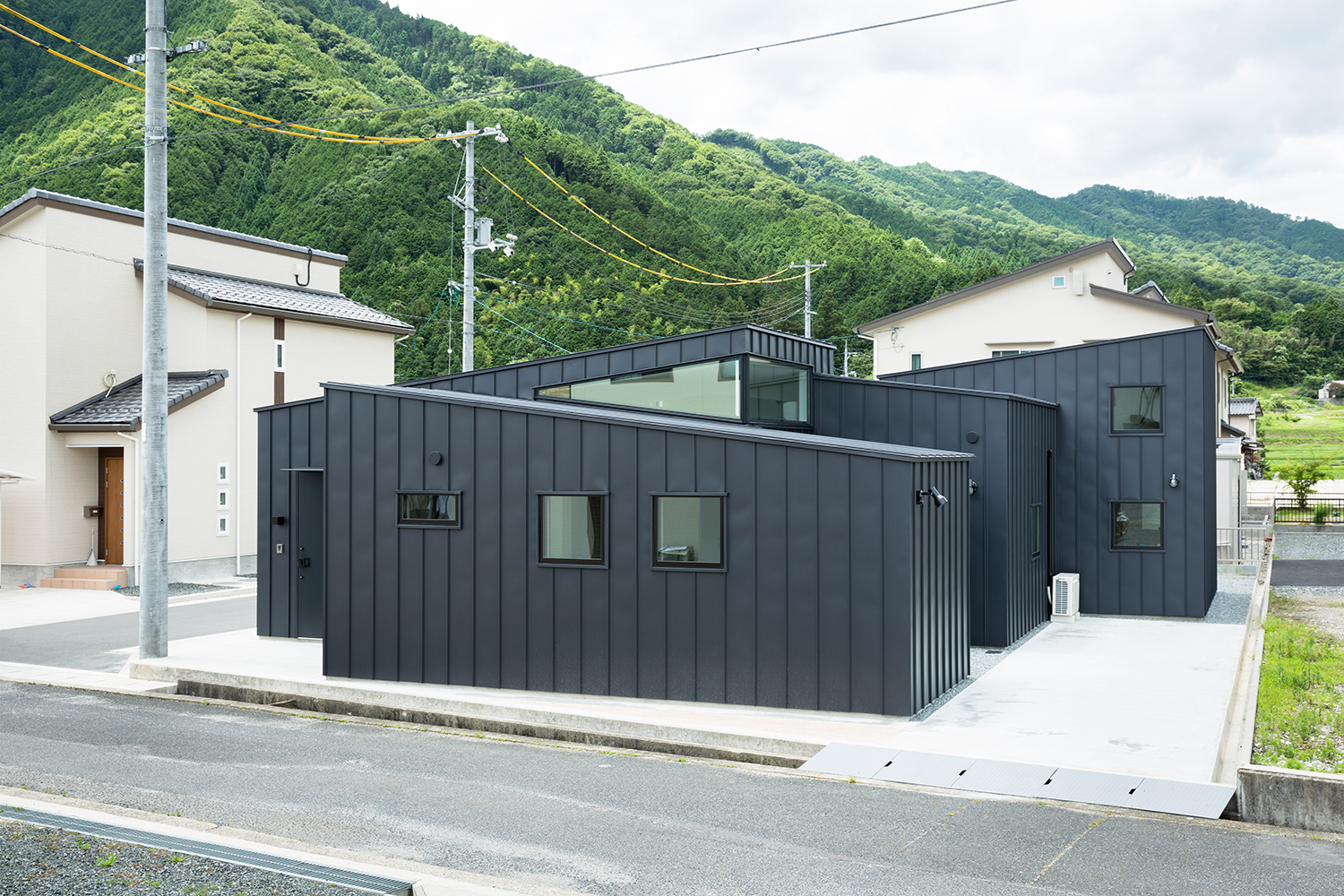
岡山県北部の山間の街に建つ住宅である。
敷地を訪れた際、周囲の山々の稜線が生み出す光と影の表情が強く印象に残った。起伏をもつ山並みは互いに影響し合いながら陰影をつくり出し、時間や季節の移ろいによって風景を刻々と変化させている。
本計画では、そのような環境に見られる陰影の関係を住空間の構成へと取り込むことを試みた。
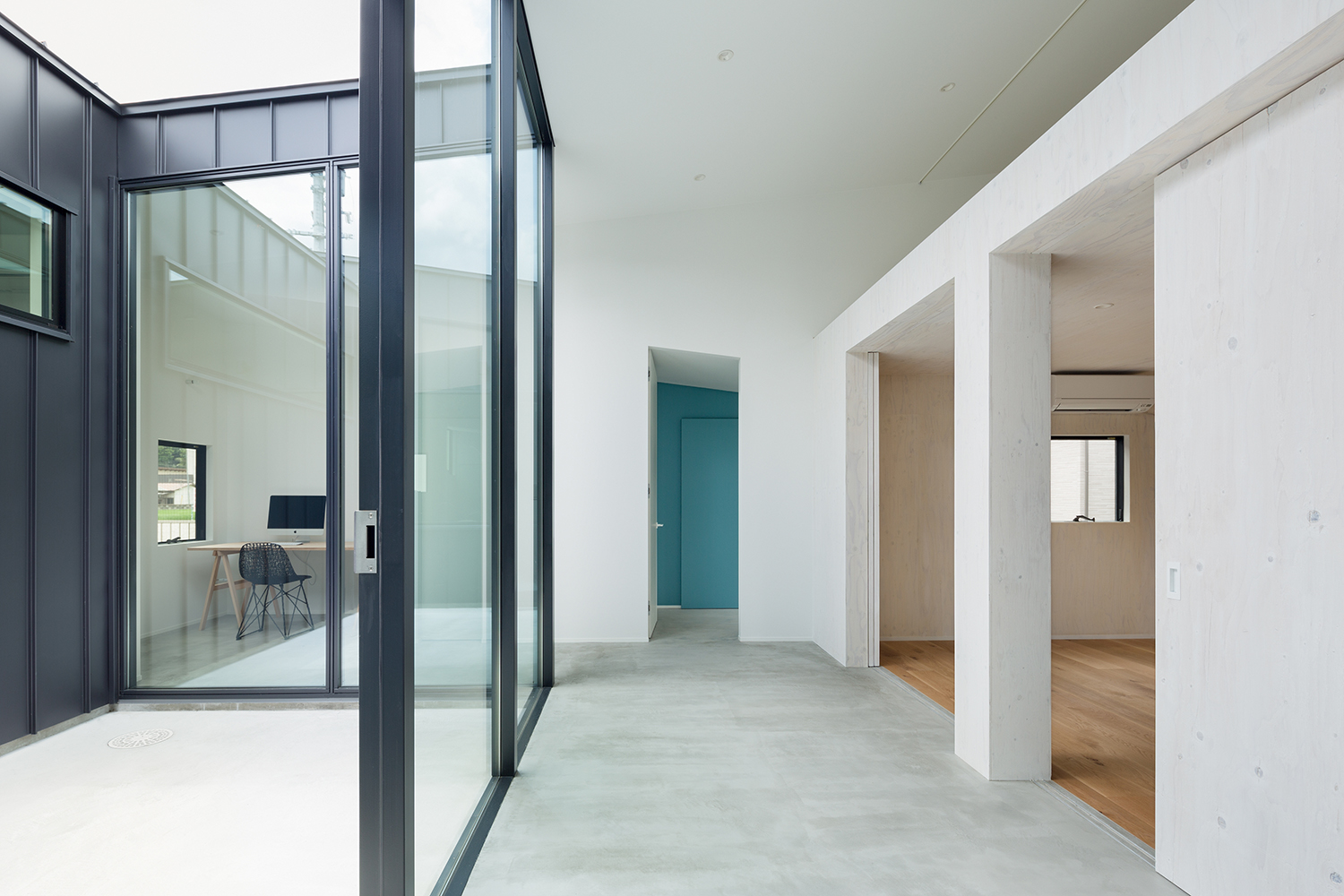
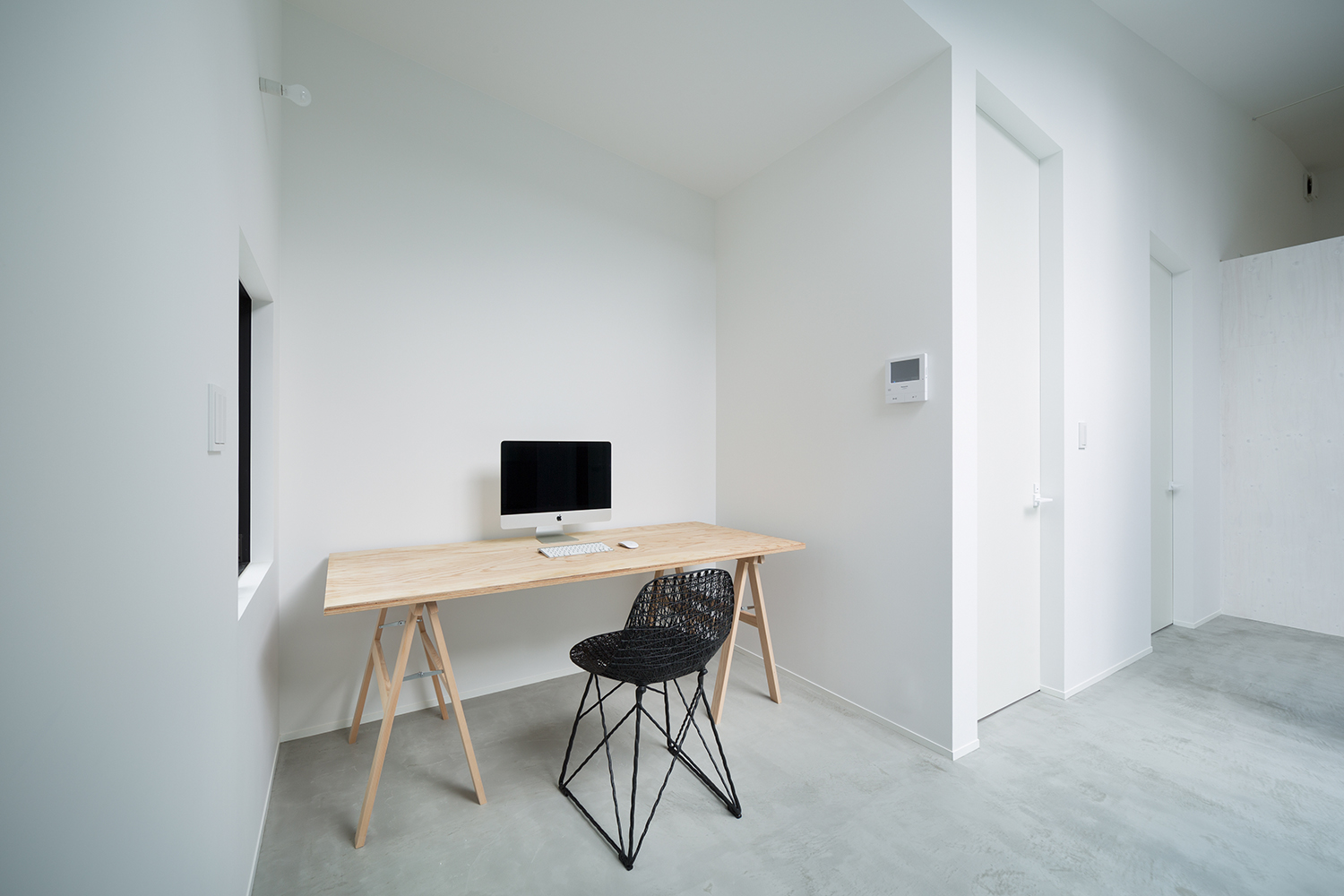
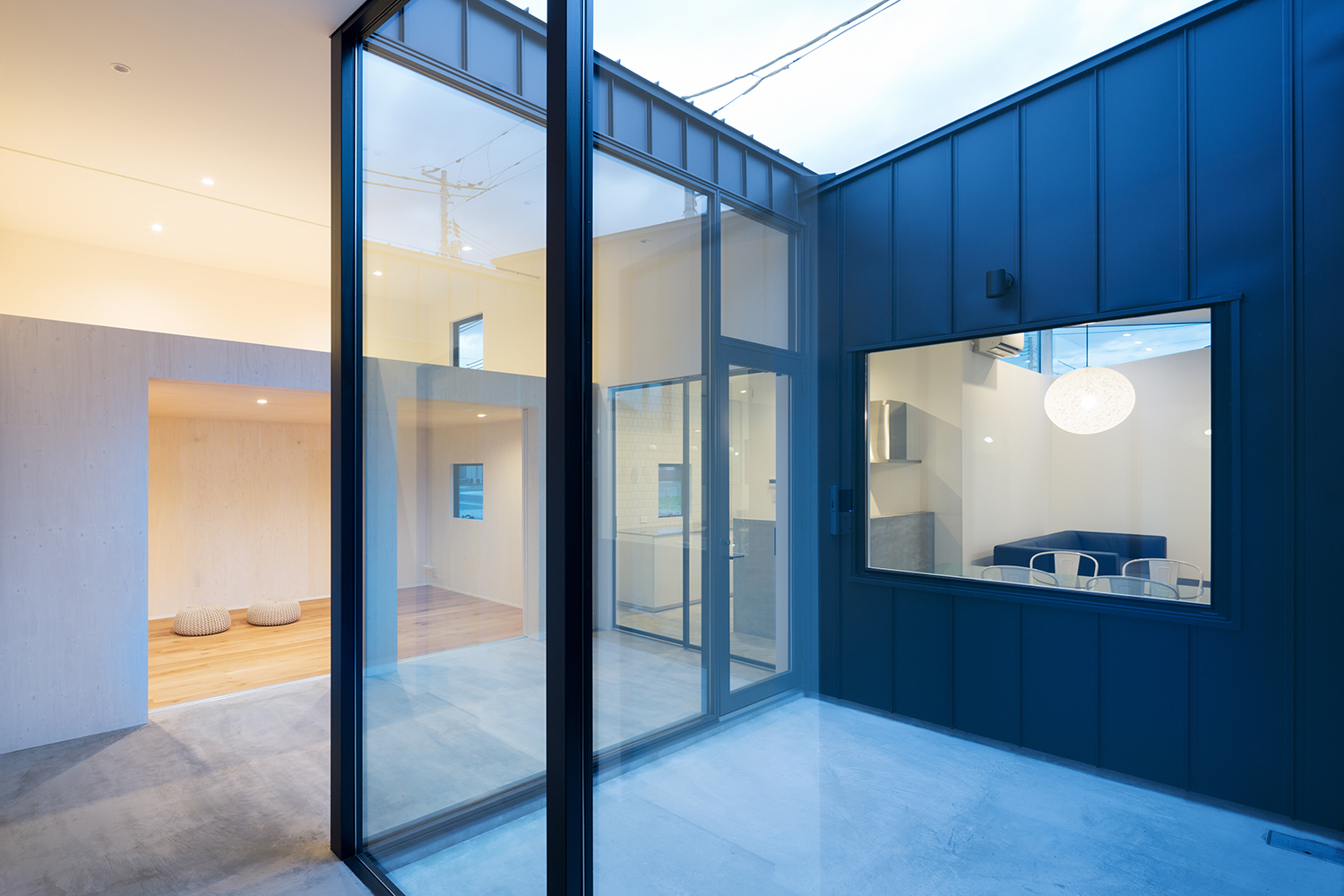
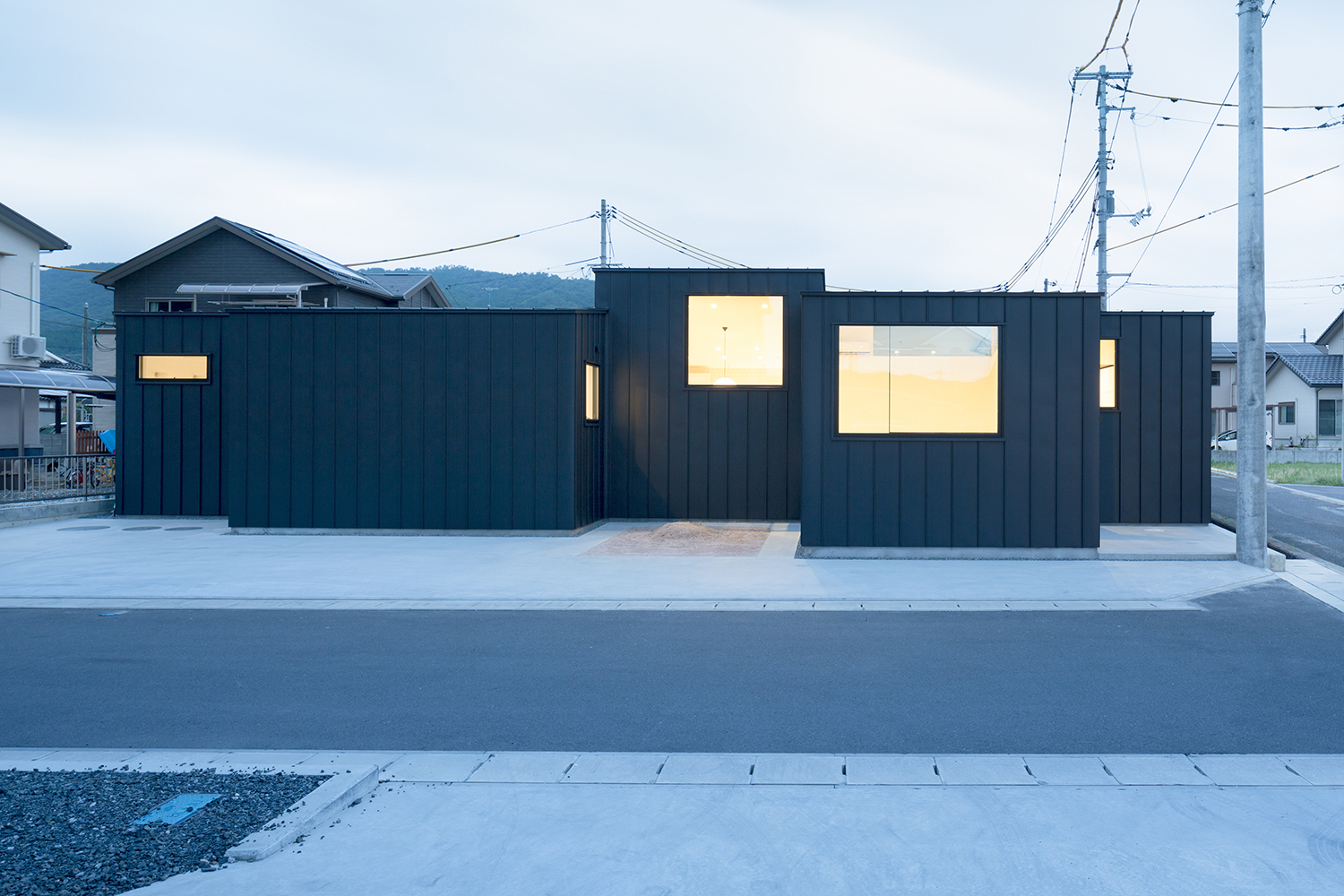
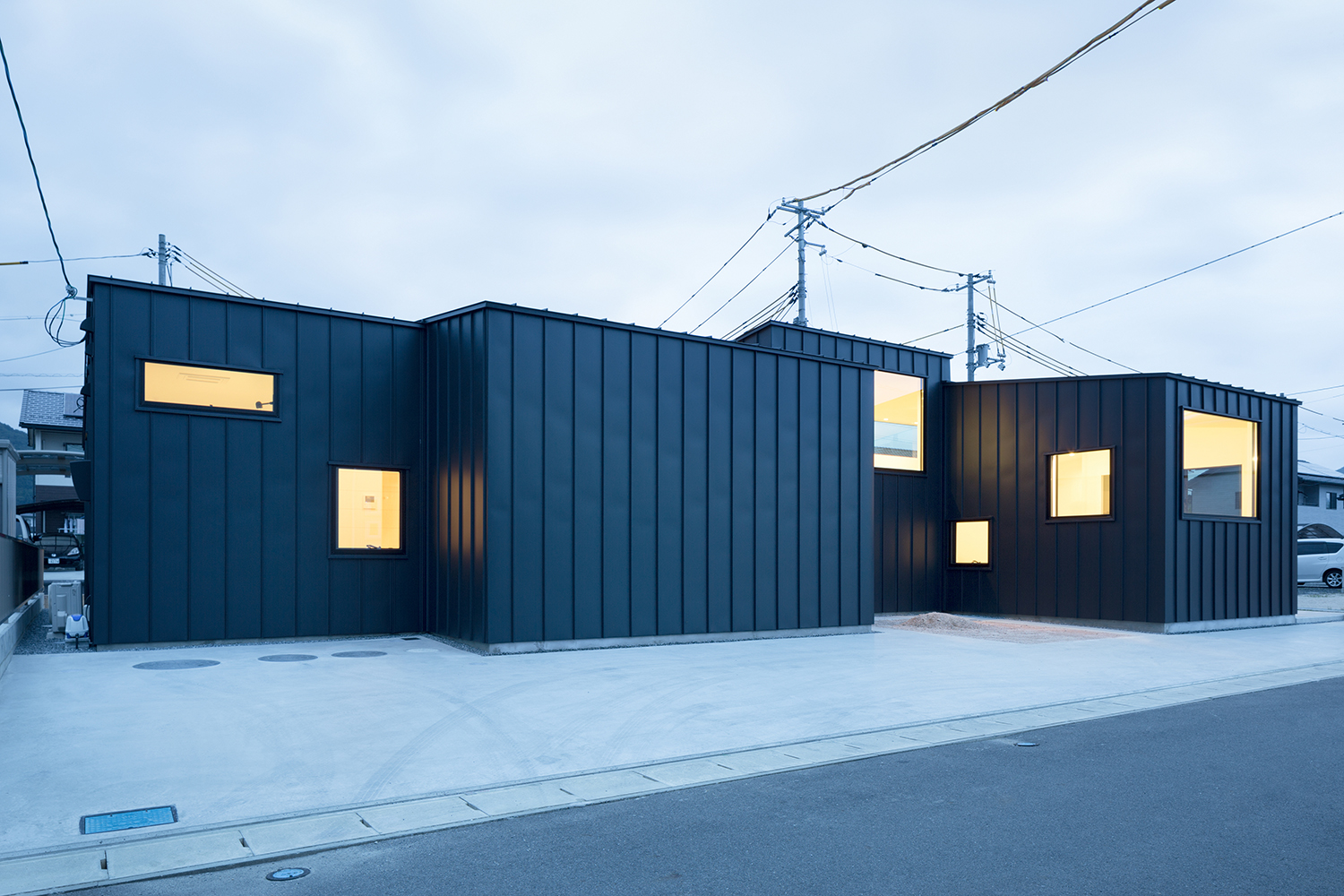
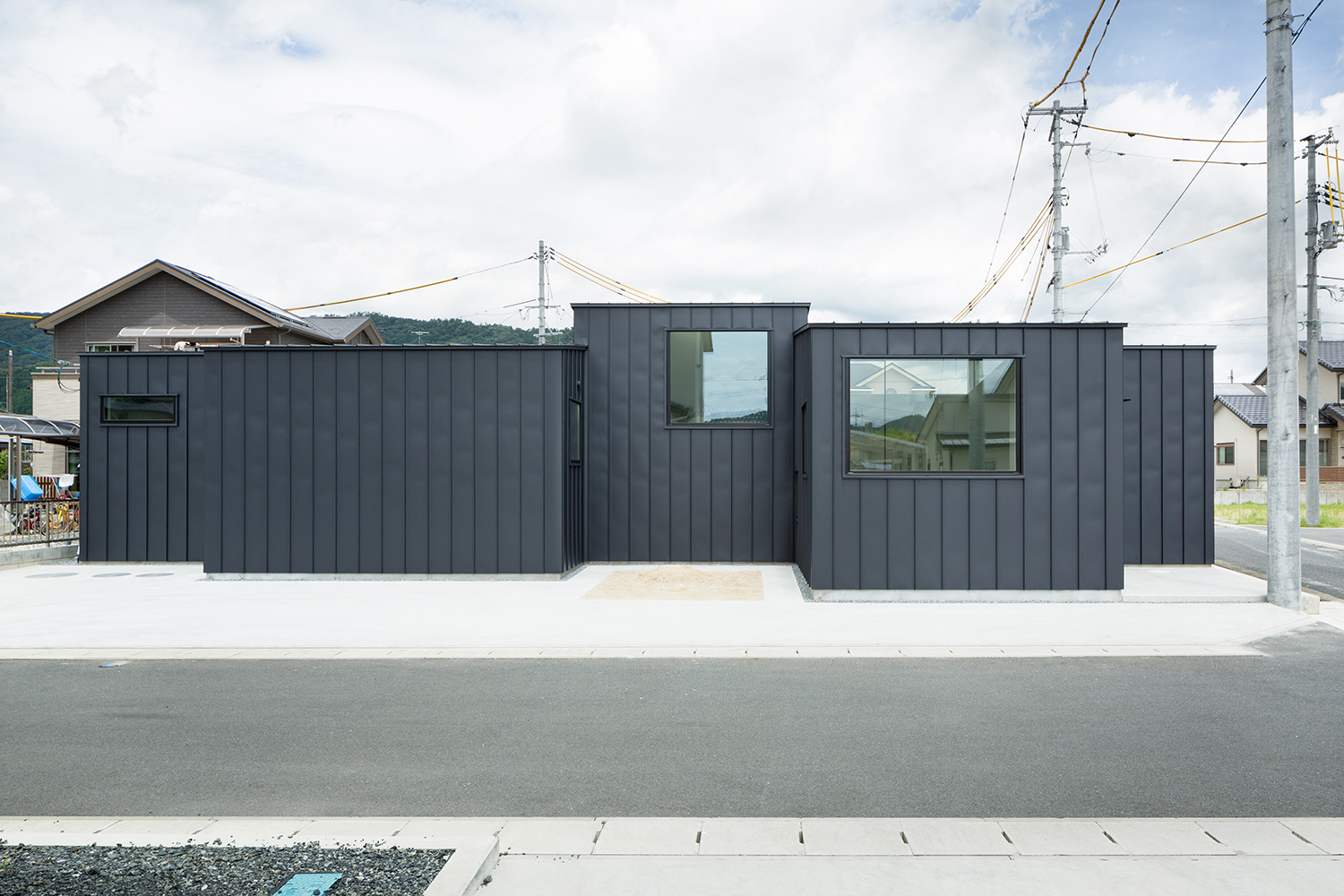
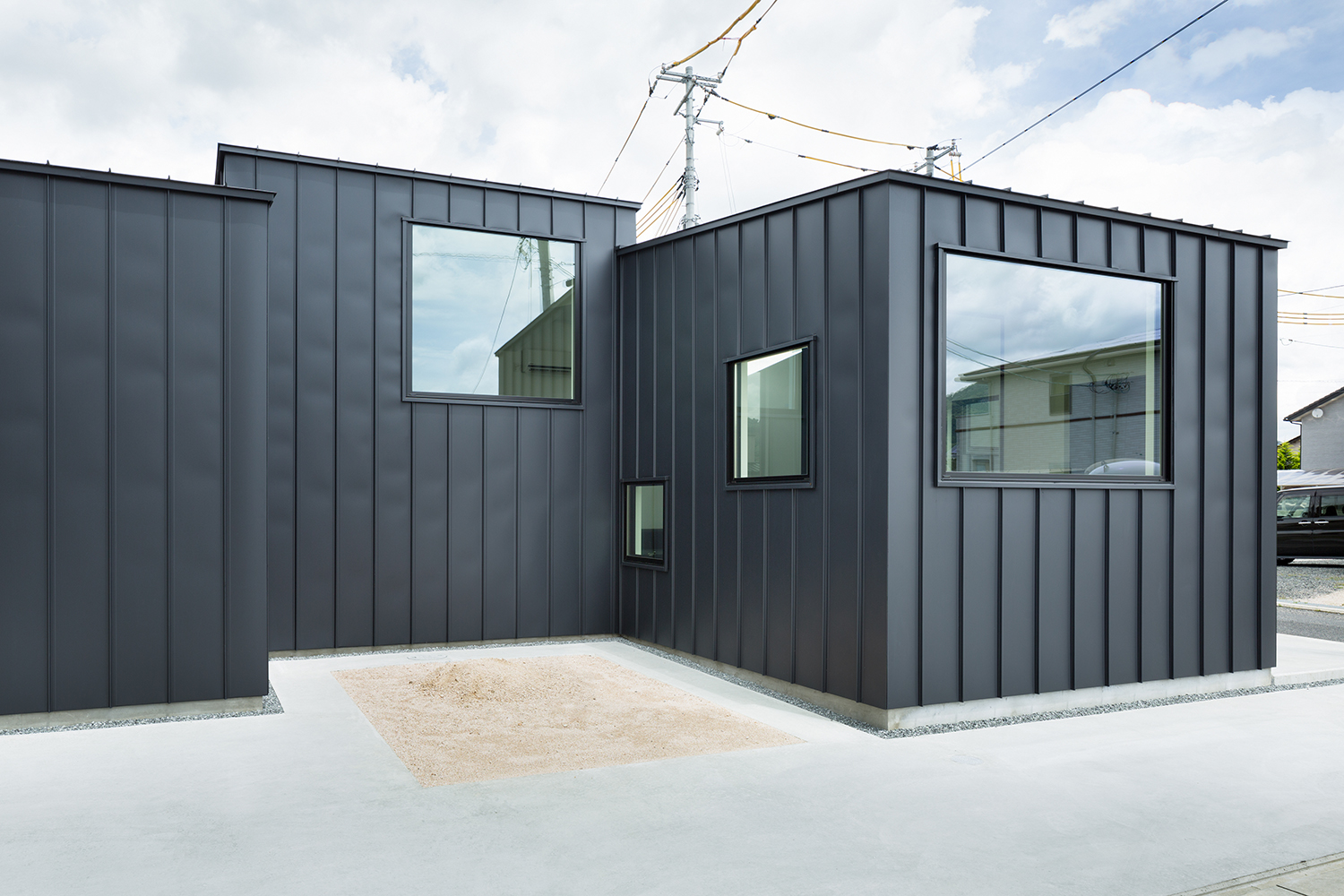
建物は平屋とし、居間、個室、水まわりなどの機能を部屋単位で五つに分節し、それぞれを独立した棟として配置している。
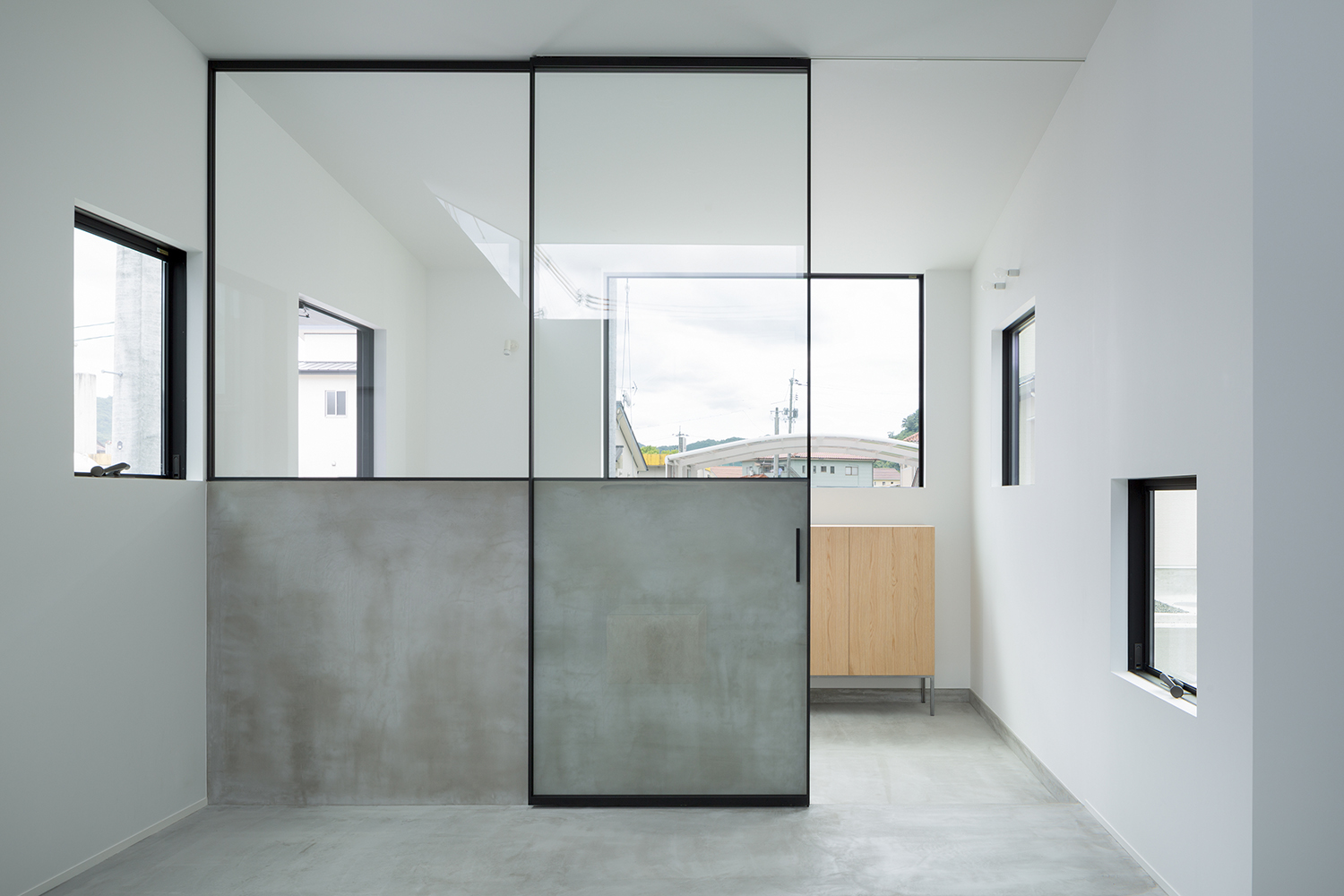
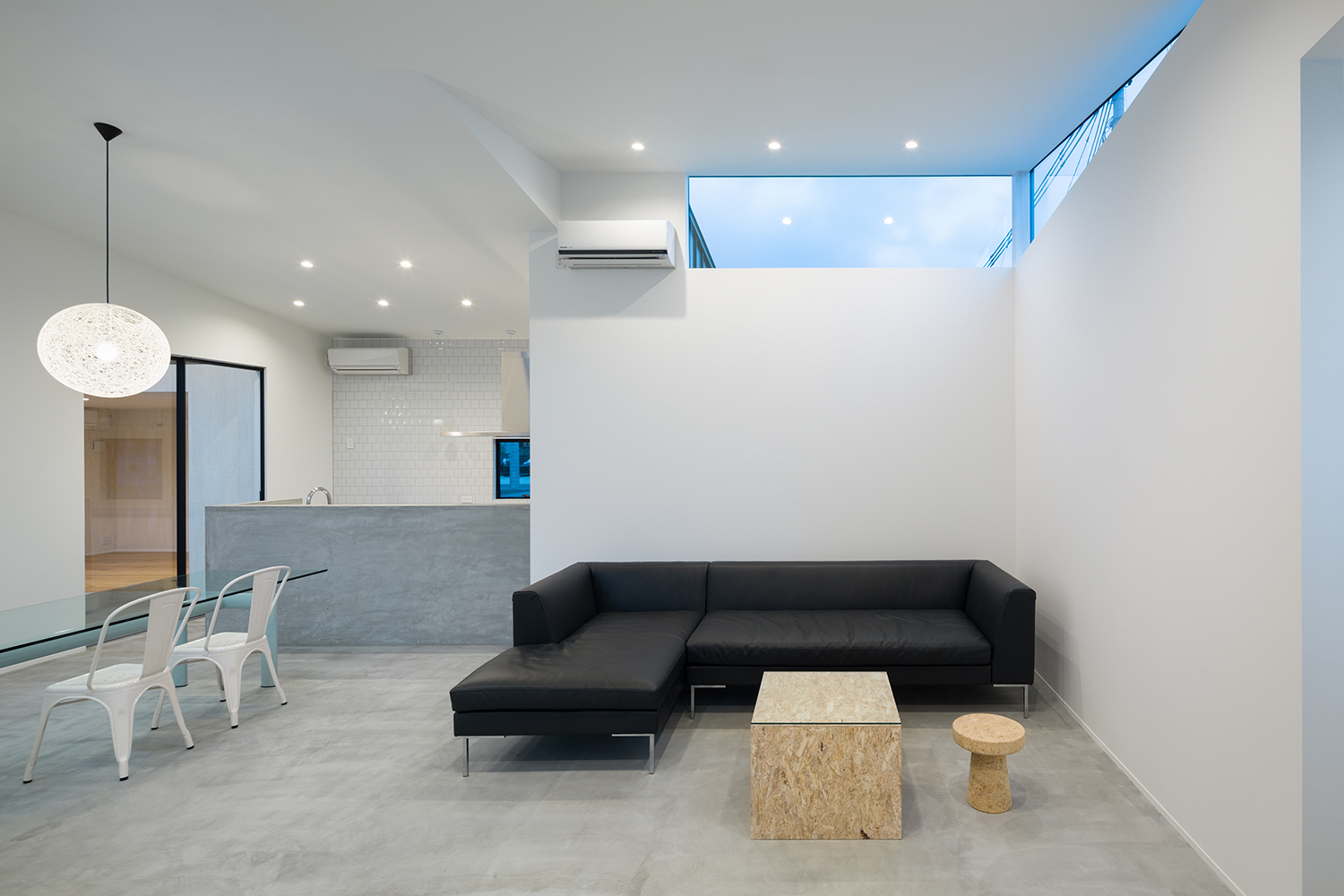
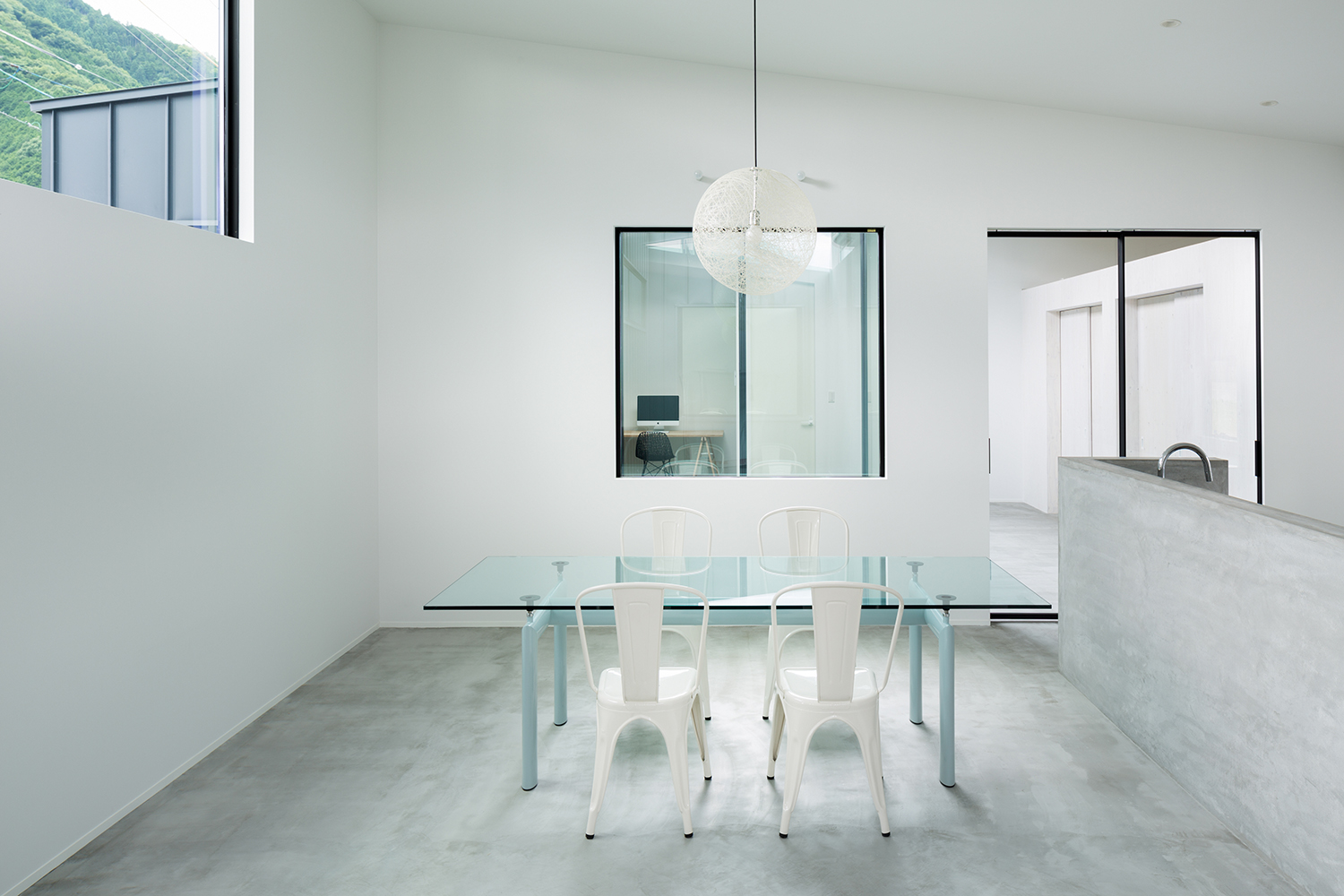
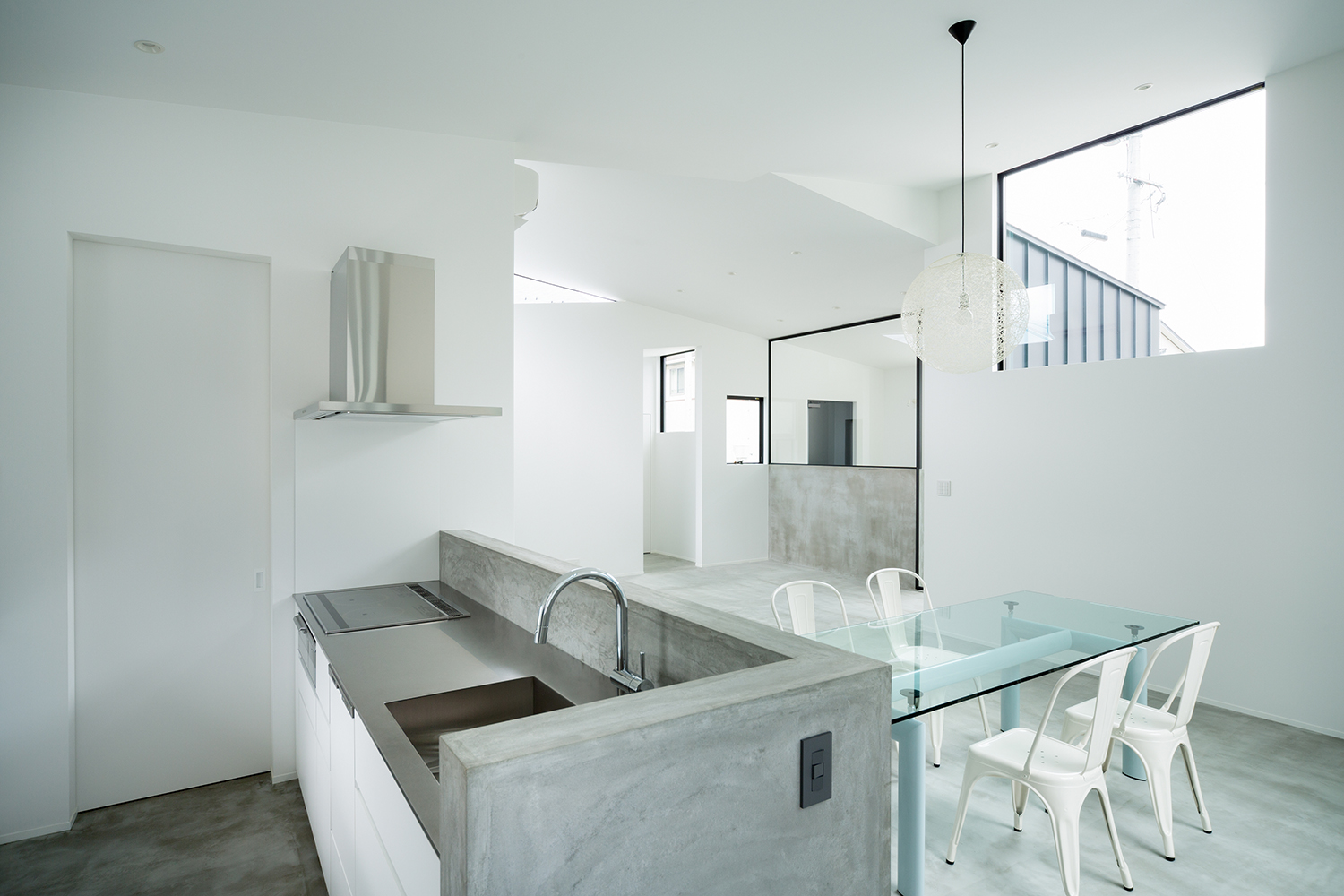
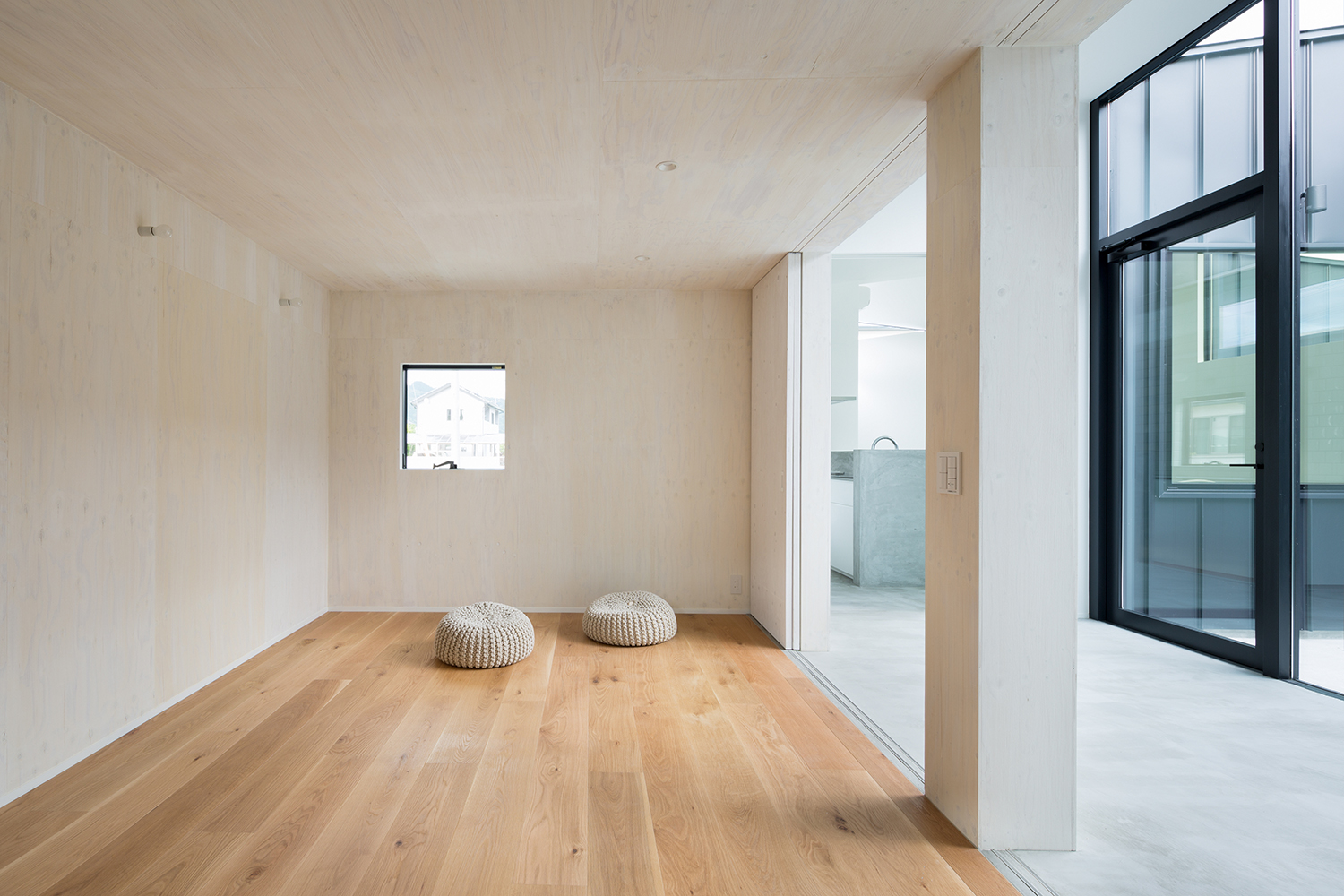
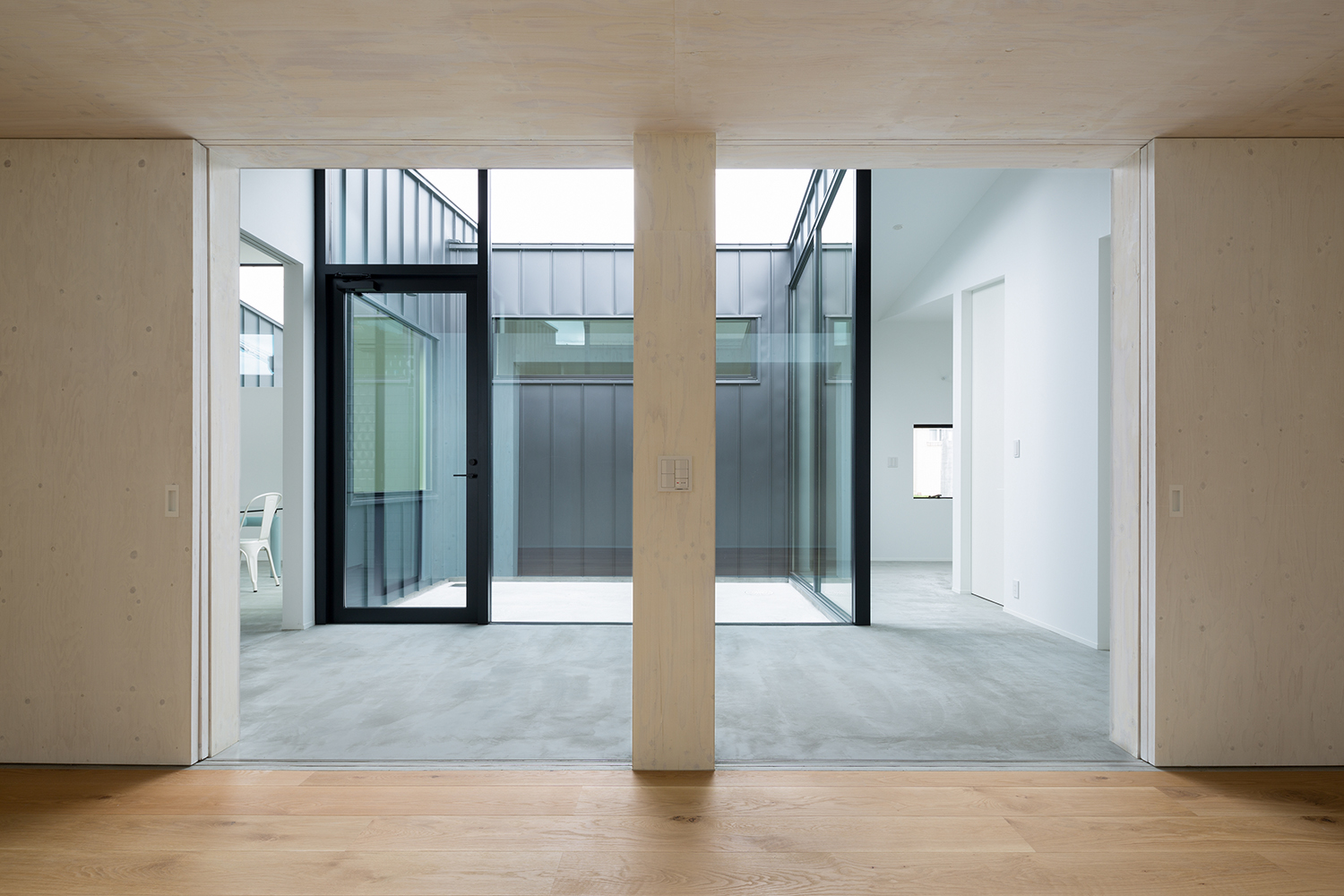
各棟は平面的にずらして配置され、さらに屋根にも勾配の差を与えることで、棟と棟のあいだに生まれるギャップを空間の構成要素として扱った。隣接する棟同士が相互に影響し合うことで、天井形状や開口部の配置にもその関係が現れている。
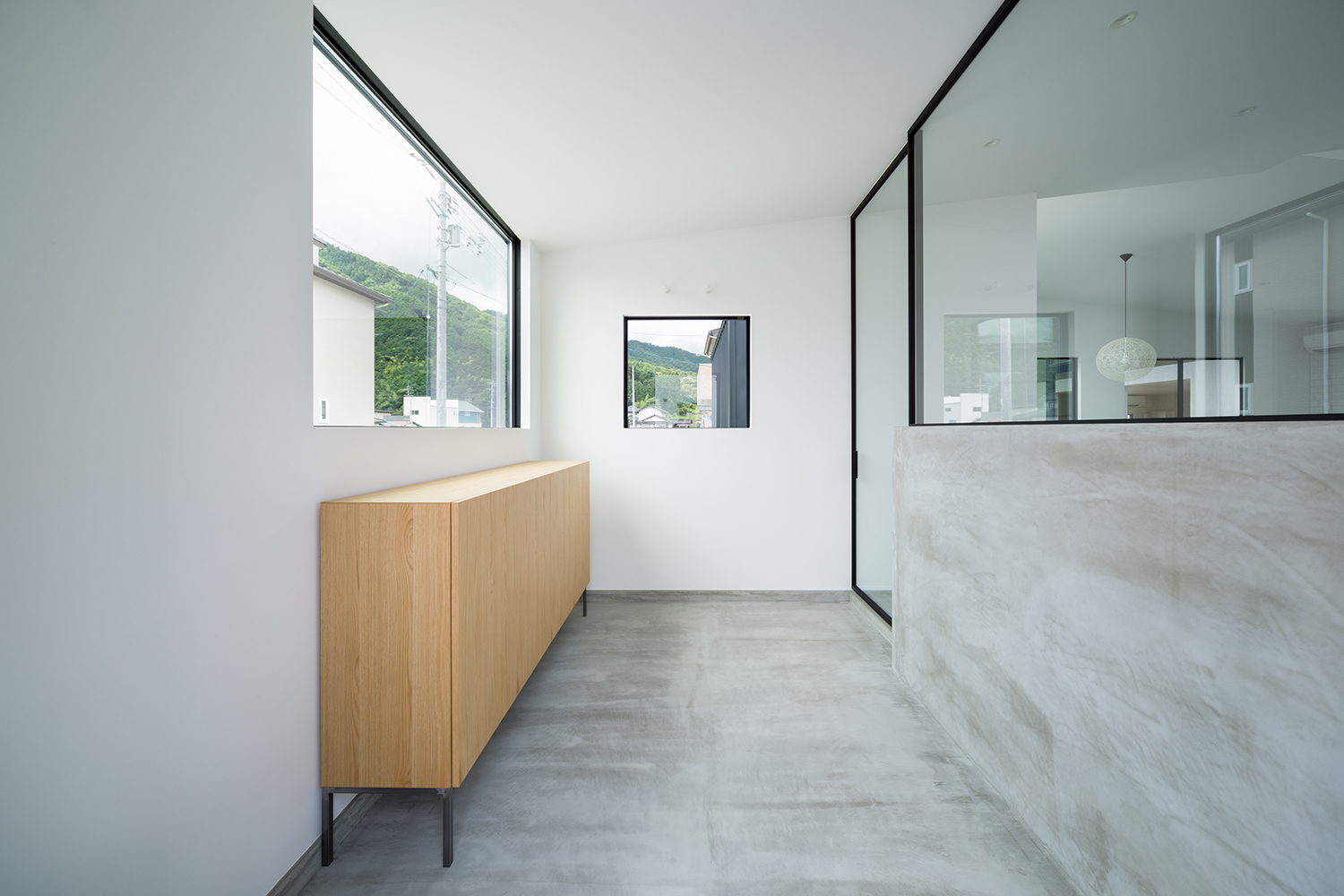
棟間のギャップに設けた窓からは多様な光が室内へと入り込み、時間の移ろいを空間の中に映し出す。内外に向けて多方向に設けた開口部によって、光の表情は季節や時間とともに変化し、住まいの内部にさまざまな陰影を生み出す。
また、棟のずれによって生まれた余白は、整形の敷地の中に駐車スペースや小さな庭をつくり出し、住宅と周囲の環境とのあいだに緩やかな距離を与えている。
山並みの起伏が生み出す陰影のように、棟の分節とずれによって生まれる光と影の関係が、時間や季節の巡りを住まいの中に映し出している。
Location : Maniwa, Okayama Japan
Type : House
Family Composition : Couple and two Children
Architect : Yasunari Tsukada design / Yasunari Tsukada
Structural engineer : SEI Kenchiku Kobo / Kiyoshige Konishi
Construction : Sakai Komuten / Akira Takimoto
Level : 1 story
Site area : 298.00㎡
Building area : 134.35㎡
Total floor area : 134.35㎡
Structure : Wood
Completion : 07/2015
photo : Takumi Ota
This house is located in a mountainous town in northern Okayama Prefecture.
During the initial site visit, the shifting patterns of light and shadow created by the ridgelines of the surrounding mountains left a strong impression. The undulating topography produces layered shadows as each ridge influences the next, while the landscape continuously transforms with the passage of time and the changing seasons.
This project seeks to translate these relationships of light and shadow into the spatial composition of the house.
The building is organized as a single-story structure composed of five distinct volumes containing the living room, private rooms, and service spaces. Each function is separated as an individual unit and arranged with subtle offsets in plan. Variations in roof pitch further emphasize the gaps that emerge between the volumes, allowing these interstitial spaces to become an essential element of the spatial composition.
Through the interaction of adjacent volumes, relationships appear in both the ceiling geometries and the placement of openings. Windows inserted within the gaps draw diverse qualities of light into the interior, allowing the passage of time to register within the space. Openings oriented in multiple directions capture changing daylight conditions, producing shifting patterns of light and shadow throughout the house.
The offsets between the volumes also generate residual exterior spaces within the otherwise regular site, forming parking areas and small gardens that mediate between the house and its surroundings.
Like the shadows cast by the undulating mountain landscape, the segmentation and displacement of the volumes create a spatial framework in which the cycles of time and season are reflected within everyday living.